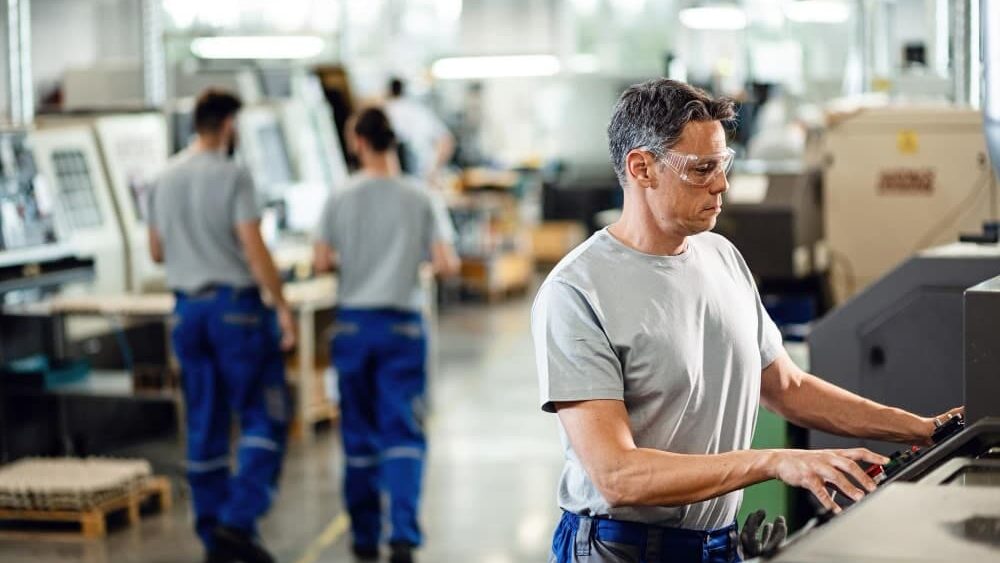
One-off production is a type of production in which individual products are manufactured to customer specifications. Each product is tailored to individual needs and often requires a separate design and production process. One-off production is characterized by high flexibility, and each unit can differ significantly from the others. These products can be highly complex, for example, custom-made machines or steel structures.
What are the stages of unit production?
Product offer calculation
Based on the customer’s requirements, a quoted price for the product is calculated. This estimate often includes materials, labor, overhead, and projected profit.
Product design
Once an order is received or a contract is signed, individual production begins by agreeing on detailed requirements with the customer and designing the product based on them. The design process can proceed in two ways:
Based on customer specifications: the customer provides the company with detailed product specifications, such as dimensions, materials, features, and sometimes even CAD models. Based on this, engineers tailor the design to the plant’s production capabilities.
based on the knowledge of our own specialists.
BOM and technology development
The next key step is developing a BOM (Bill of Materials), a detailed list of materials needed to manufacture the product. The BOM is a document that includes a list of raw materials and consumables; components and subassemblies; technical specifications; and a list of suppliers and subcontractors.
production process is developed
Ordering materials
Once the BOM is developed, the purchasing department begins ordering materials. This process may include selecting suppliers, negotiating purchasing terms, and ensuring the quality of deliveries.
Production planning and execution
Once materials have been received, production planning and execution begin. This stage includes: production process planning, resource allocation, production execution, quality control, and testing.
How does an ERP system support the management of individual production?
Unit production management in the ERP system includes the following elements.
Automation of BOM and production route creation
To begin with, integrating an ERP system with CAD software allows for the direct import of design data and improved management of production technology. The most important aspect in this context is the process of creating a BOM and production route, as individual products are often highly complex. It’s worth noting that CAD imports and internal ERP wizards save significant time and avoid many errors.
Streamlining procurement based on BOM
Procurement that takes into account the information contained in the BOM allows for faster and more precise ordering, which is especially important when there is a long waiting period for specialized materials.
Production planning and scheduling
An ERP system can help us precisely plan production stages and then adapt the schedule to the needs of a specific order, taking into account the current situation on the shop floor. Both our company and the recipient can know the status of a given order.
Warehouse management
Managing discrete production in an ERP system, especially in industries such as machinery and construction, requires full traceability—the ability to track each component at every stage of the production process. An ERP system supports this by recording precise data on the origin of materials, production batches, and tracking the history of all component operations. For example, in the case of machinery production, ERP enables traceability from raw material procurement through processing to final assembly. If a problem arises with a specific batch of materials, the company can quickly identify the products in which they were used, allowing for more effective complaint management and ensuring compliance with quality standards.
Cost and resource tracking
An ERP system for discrete production management facilitates the monitoring of costs related to materials, labor time, and other resources, allowing for better budget and schedule control. For example, during the production of a unique machine, ERP records material consumption and labor time at each stage. This allows managers to continuously check whether costs and schedules are in line with the plan. In the event of delays or additional expenses, they can react quickly and make adjustments, minimizing the risk of budget overruns and delays.